Space Art Factory
Discover the latest additions to our Space Art—handpicked pieces that bring new energy to your space.
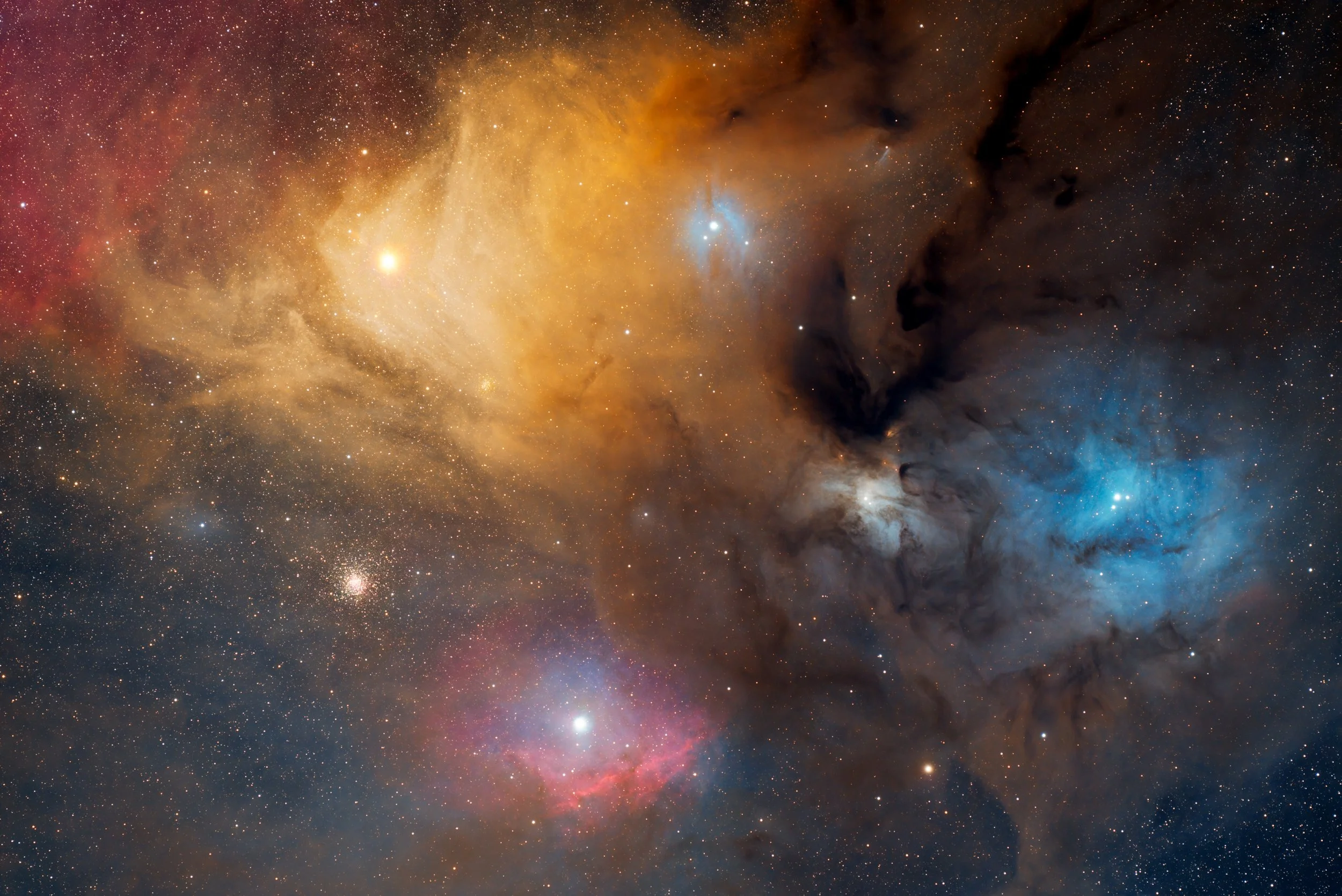
An area of the sky where an extraordinary amount is happening. Dust clouds, stars, nebulae, star clusters — all gathered remarkably close to us, just 400 light-years away. A true explosion of cosmic colors.
This region is a prime subject for astrophotographers, as new stars are being born here, which is why it is often referred to as a stellar nursery — and not without reason.
Exposure time: 57 × 180 s (2 h 51 min)
Telescope: RedCat 51
Camera: ASI 2600 MC Pro
Mount: UMi 17R
Location: Hakos, Namibia
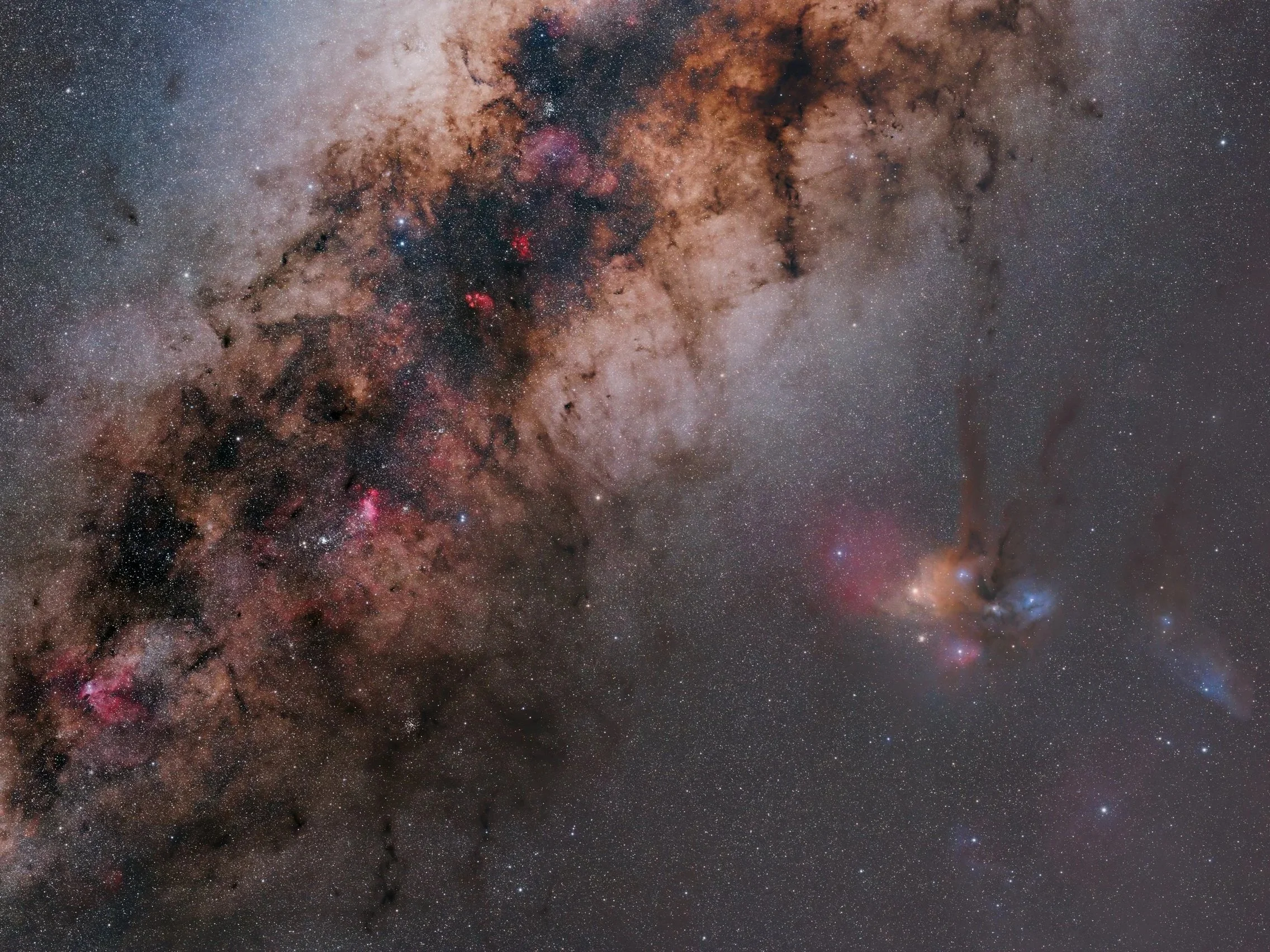
This wide-field image captures the central region of the Milky Way together with the Rho Ophiuchi molecular cloud complex, photographed from Tivoli Farm, Namibia, under exceptionally dark southern skies. The frame includes nearly the entire Scorpius constellation, immersed in one of the densest and most visually rich sections of our Galaxy.
Lens: Sigma Art 50 mm
Camera: Canon EOS R
Mount: Sky Guider Pro
Exposure time: 40 × 120 s
Location: Tivoli Farm, Namibia
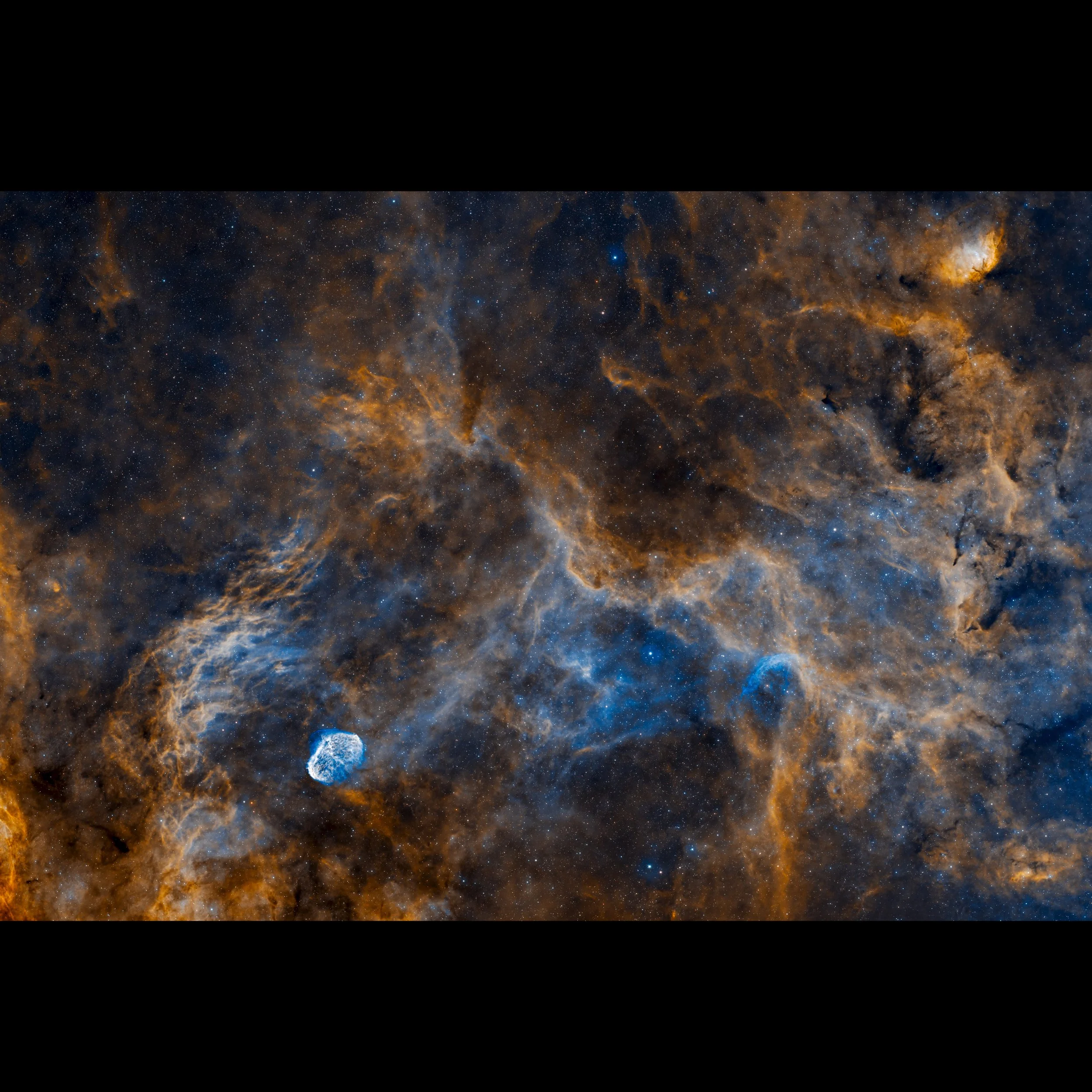
We are looking toward a dense region of the Milky Way. The most striking feature of this image is the “Brain” — the Crescent Nebula (NGC 6888), visible in the lower left part of the frame. Its distinctive shape was formed by an exceptionally bright and hot star at its center.
As the star evolved, it shed its outer layers, which—driven by powerful stellar winds—created this compressed, filamentary structure. This dynamic and colorful region is constantly changing. If I were a brain, this is exactly where I would choose to hide.
Telescope: William Optics RedCat 51
Camera: ZWO ASI2600MC Pro
Mount: UMI17R
Exposure time: 70 × 300 s
Location: Kaźmierz, Poland
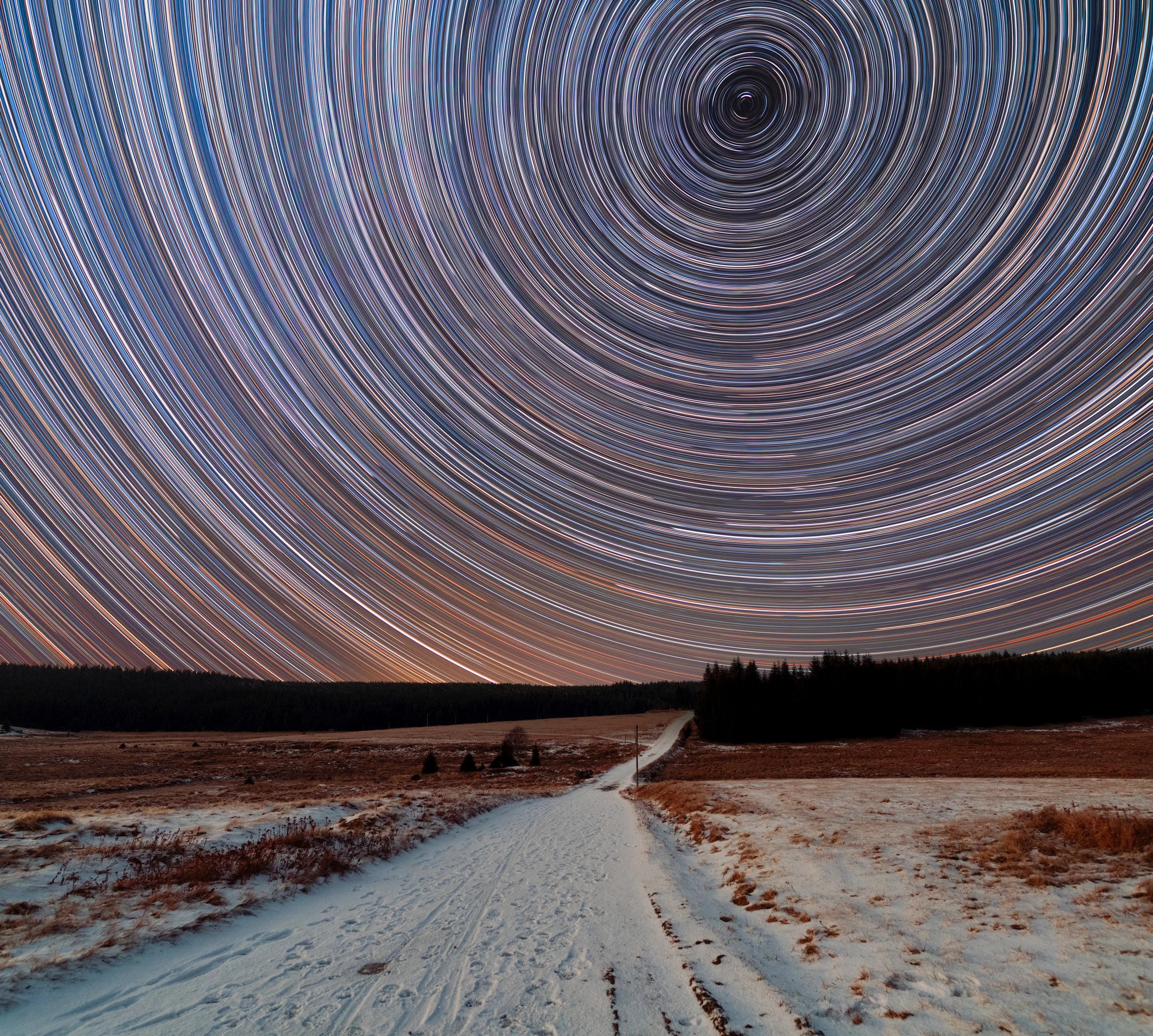
A long-exposure photograph of the night sky above the Izera Mountains reveals the apparent motion of stars circling the North Star. Hundreds of luminous arcs form a hypnotic vortex across the sky, capturing the rotation of the Earth and the passage of time.
Telescope: Sigma Art 20 mm
Camera: Canon R
Mount: Tripod
Exposure time: 450 ×30 s
Location: Hala Izerska, Poland
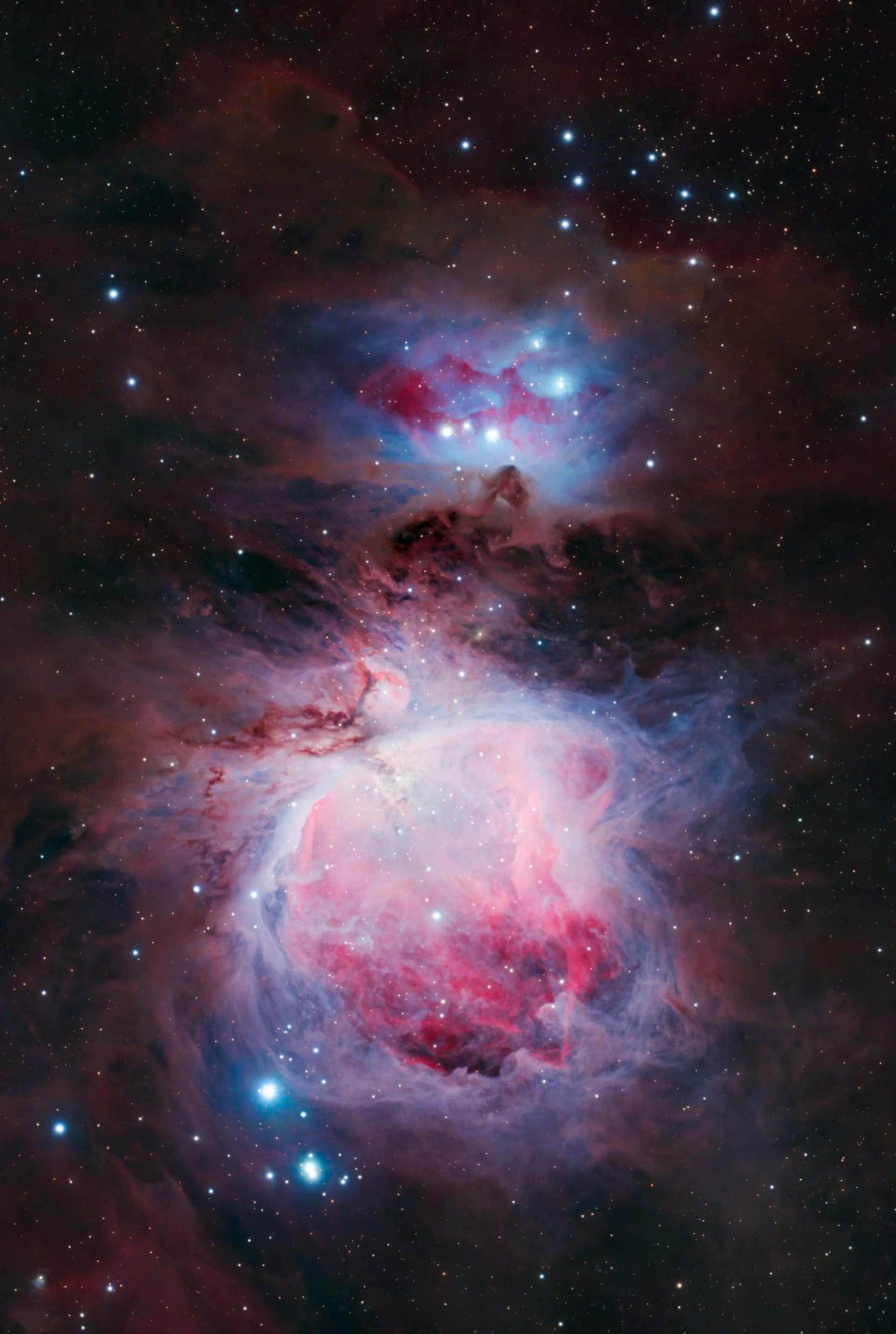
The Great Orion Nebula is the brightest diffuse nebula in the night sky and can be observed with the naked eye. It is located in the constellation of Orion, just south of Orion’s Belt.
M42 lies at a distance of 1,344 ± 20 light-years from Earth, making it the closest major star-forming region to our planet. The nebula spans approximately 30 light-years in diameter and is one of the most studied and photographed objects in the night sky.
A breathtaking deep-sky object showcasing glowing gas clouds, newborn stars, and cosmic dust — a true icon of astrophotography.
Telescope: Askar FRA600
Camera: ASI 2600 MC PRO
Mount: Umi17R
Exposure time: 253 × 180 s RGB, 57× 300 s Ha&Oiii
Location: Kaźmierz/Pestkownica, Poland 20-22.09.2025
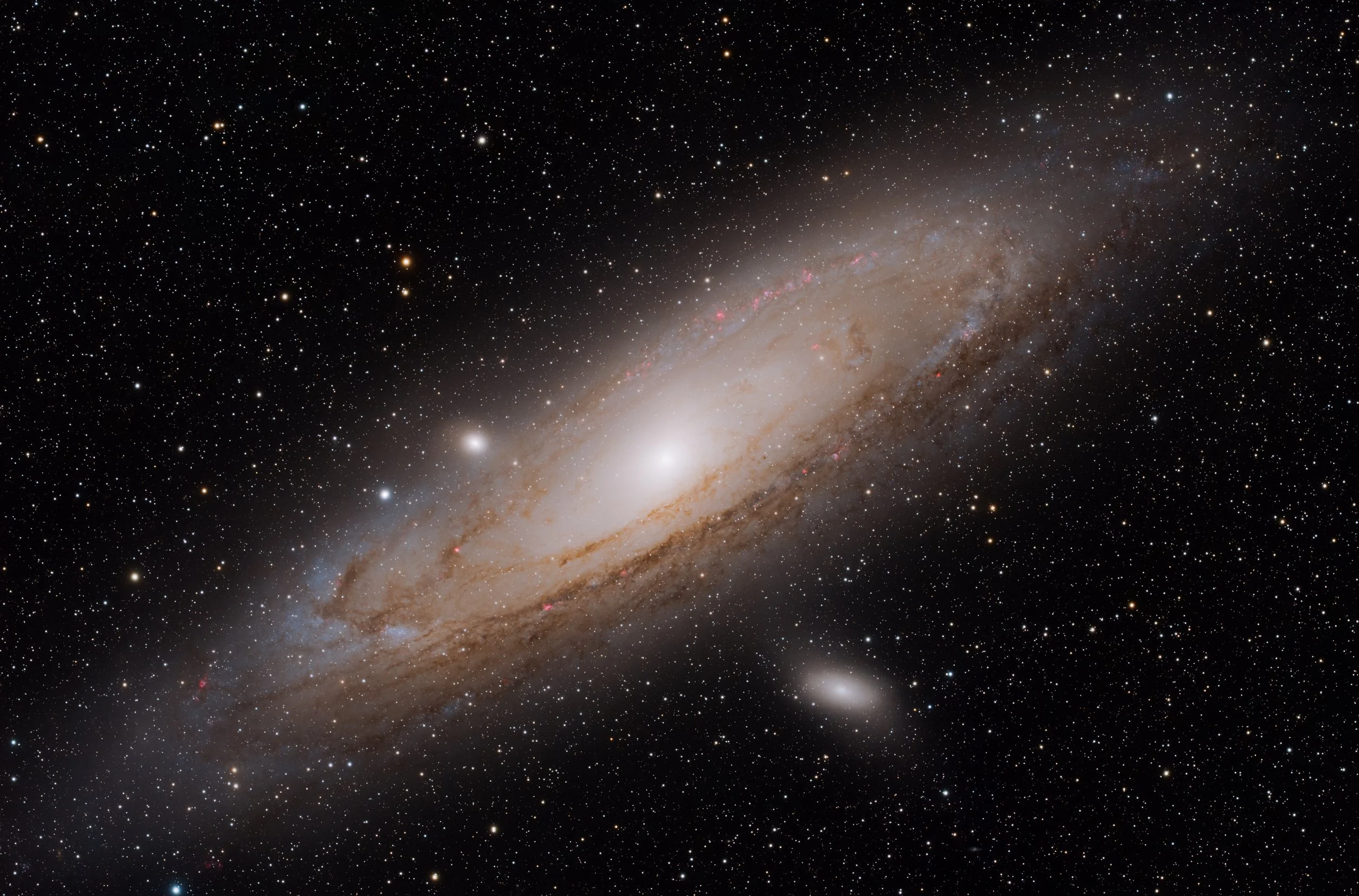
A breathtaking view of the Andromeda Galaxy, our nearest spiral neighbor. Its glowing core and graceful arms bring a sense of depth, calm, and cosmic wonder to any space. A timeless piece inspired by the vastness of the universe.
Telescope: Askar FRA600
Camera: ASI 2600 MC PRO
Mount: Umi17R
Exposure time: 131 × 180 s RGB, 30× 300 s Ha
Location: Kaźmierz, Poland 09.2025
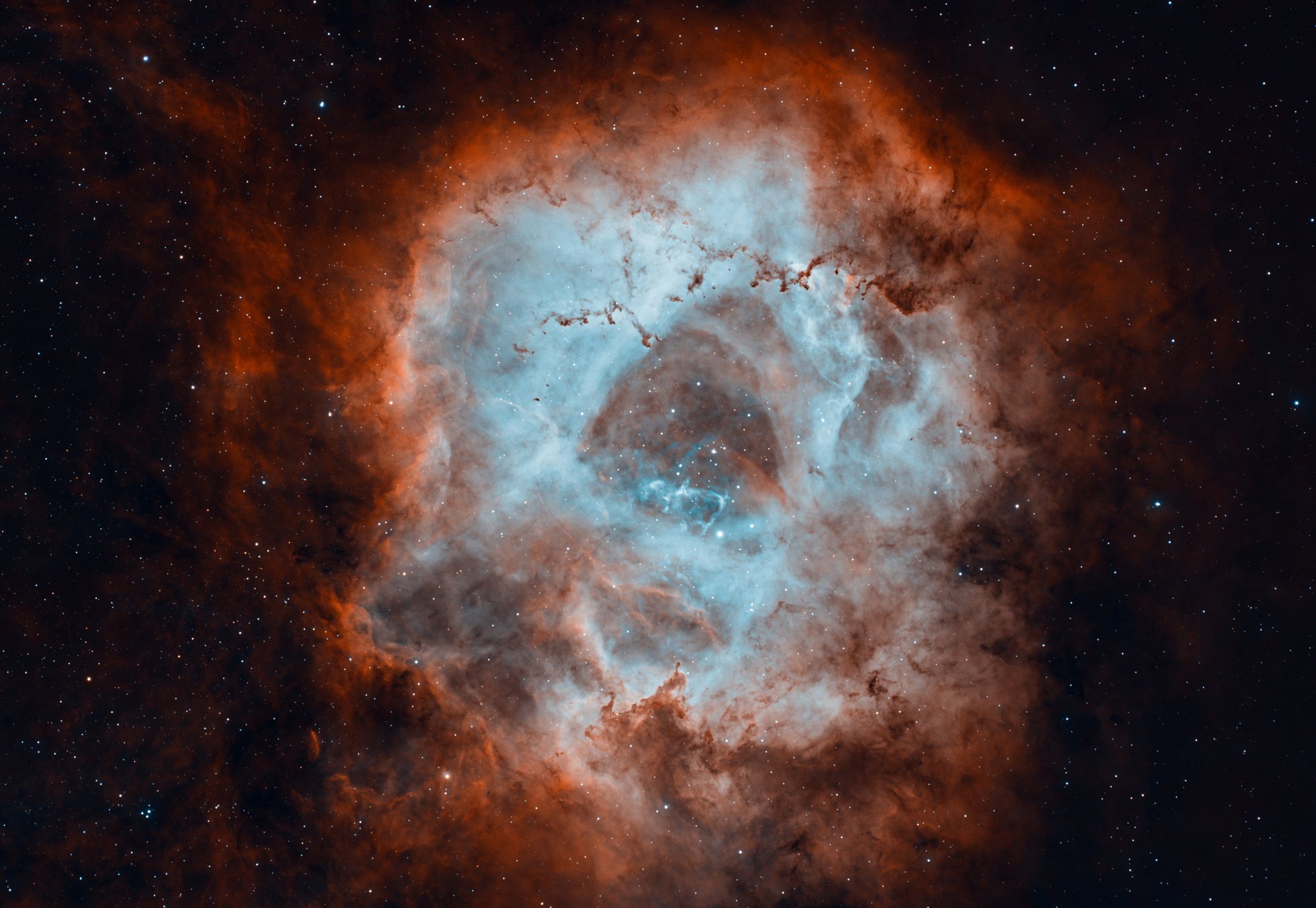
The Rosette Nebula is a vast emission nebula located about 5,000 light-years away in the constellation Monoceros. Spanning over 130 light-years, this cosmic rose is a powerful stellar nursery where new stars are actively being born.
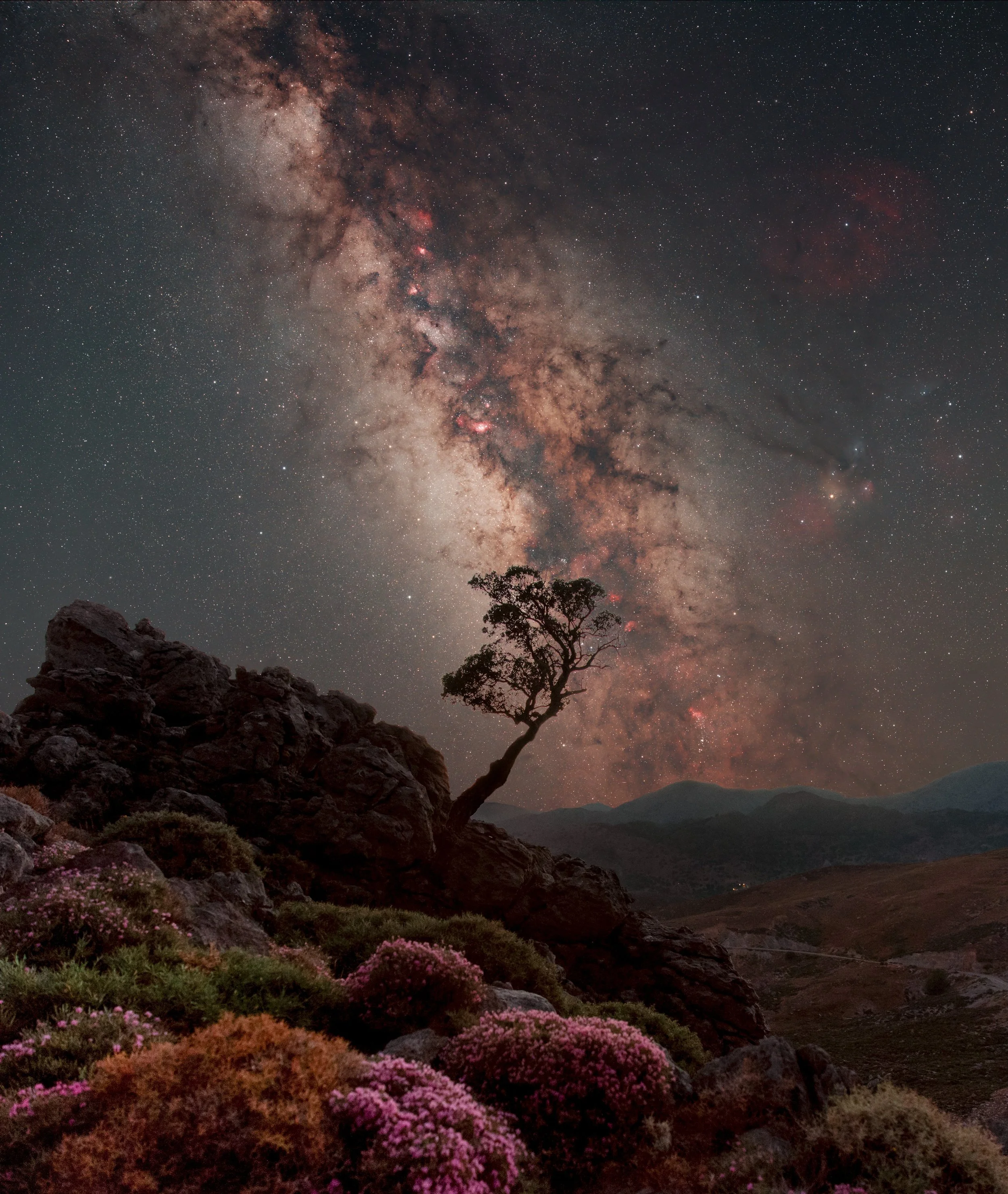
Getting to the place where this photo was taken was a serious dose of adrenaline. Steep, narrow, windy. Of course—mountains. When the road ends, you grab your gear under your arm and keep going—toward an even better view. Sometimes a stone rolls down the slope, sometimes a sound of unknown origin appears. The senses go wild…
Exposure time: 28 × 120 s
Lens: Samyang 16 mm
Camera: modified Canon 60D
Mount: iOptron SkyGuider Pro
Location: Crete, Greece

This image captures extensive structures of interstellar dust and gas in the constellation Corona Australis, located along the Galactic plane of the Milky Way in the southern celestial hemisphere. The field contains a complex mix of dark absorption nebulae and reflection nebulae, revealing the distribution and density variations of the interstellar medium.
Telescope: William Optics RedCat 51
Camera: ZWO ASI2600MC Pro
Mount: UMI17R
Exposure time: 96 ×180 s
Location: Tivoli, Namibia
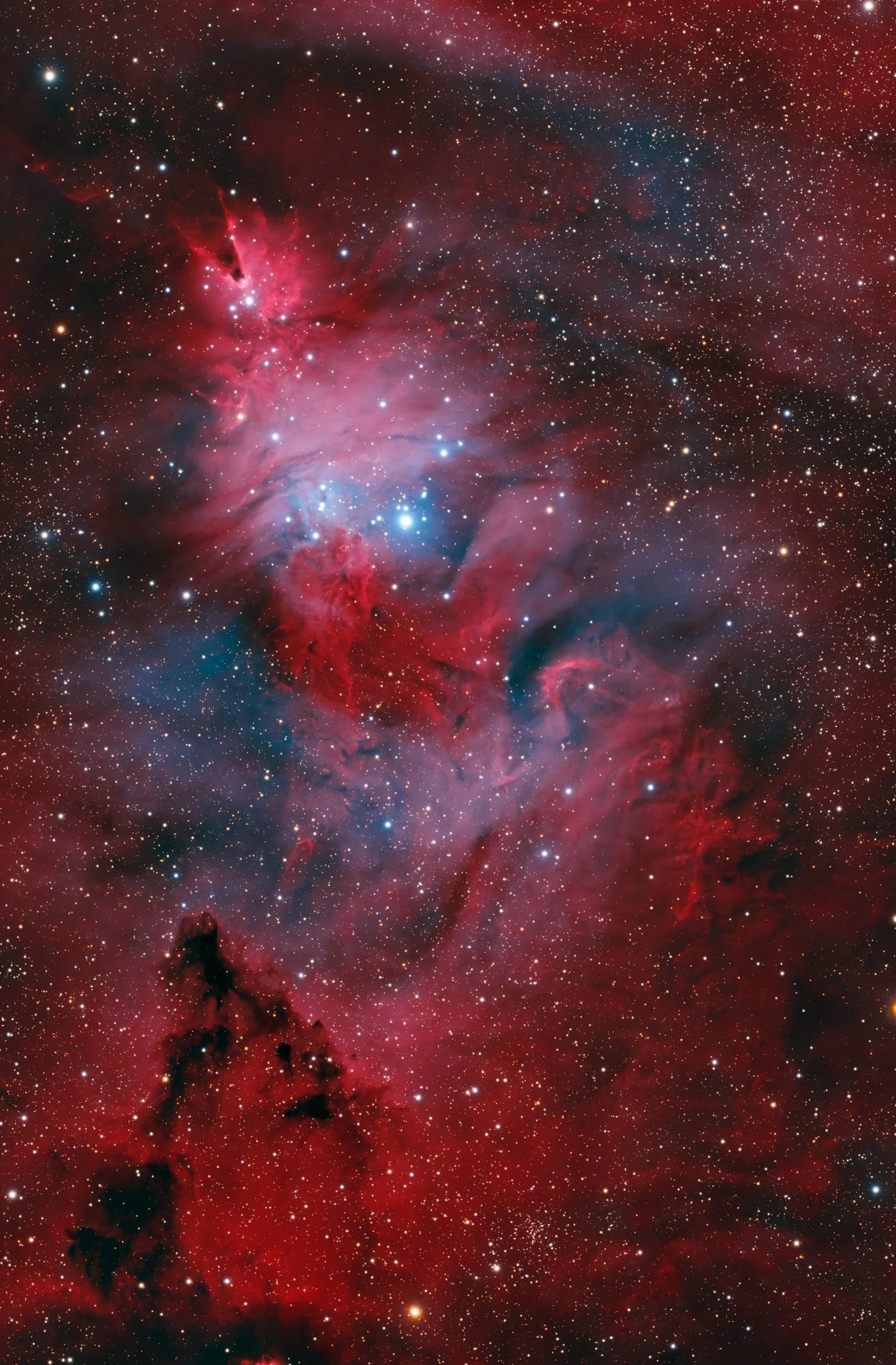
NGC2264 - the cosmic Christmas Tree, including the Cone Nebula and Fox Fur Nebula, immersed in an intense red glow of hydrogen.
Telescope: Askar FRA600
Camera: ZWO ASI2600MC Pro
Mount: UMI17R
Exposure time: 139 ×120 s RGB, 57 ×300 s Ha+Oiii 3nm
Location: Kaźmierz, Poland
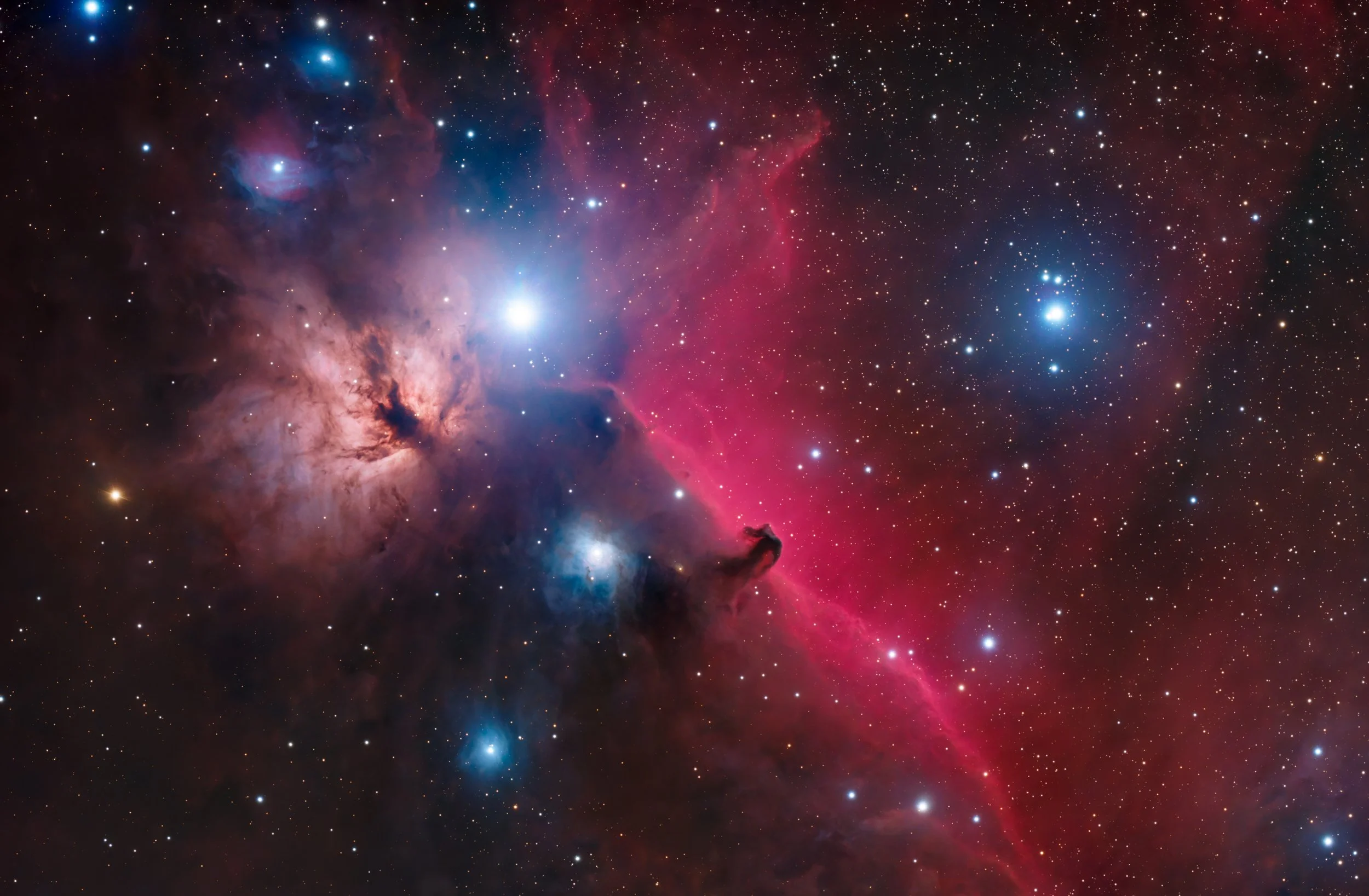
A mesmerizing portrait of the cosmos capturing one of the most iconic regions of the night sky. The image is dominated by the majestic Horsehead Nebula, emerging from dense clouds of cosmic dust and hydrogen, intersected by an intense red glow of ionized gas. Subtle blue highlights from young stars accompany the scene, set against a rich Milky Way backdrop filled with thousands of points of light.
Lens: Askar FRA600
Camera: ZWO ASI2600MC Pro
Mount: UMi 17R
Exposure time:
RGB: 139 × 120s (4h 38m)
Hα: 57 × 300s (4h 45m)
Location: Kaźmierz, Poland
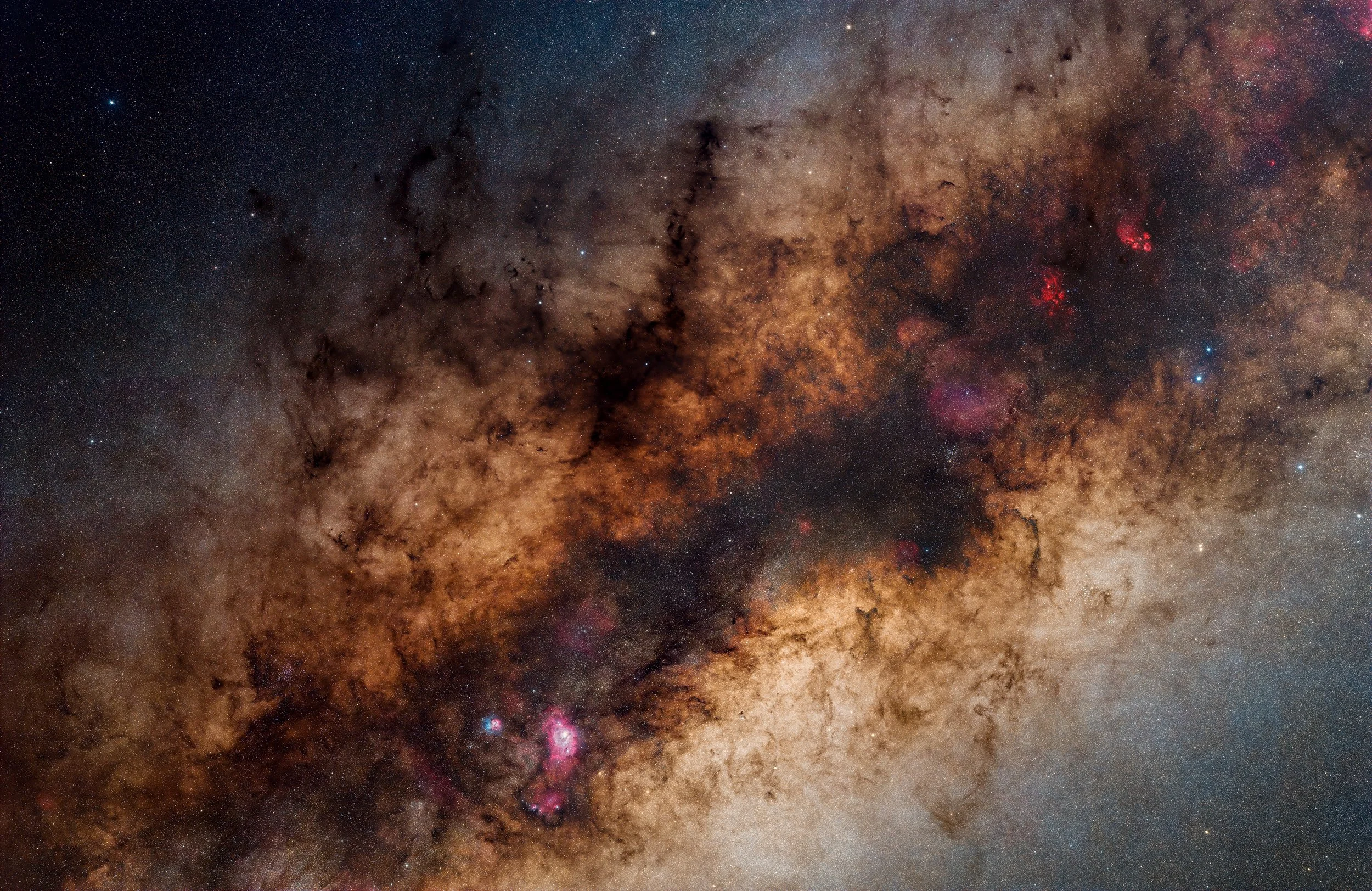
We are looking at the center of the Milky Way. This region is so rich and diverse that describing all visible objects would require a pocket-sized encyclopedia—so I will spare you that.
In short, what we see here are entire generations of stars of different ages, brightness levels, and masses. Some are coming to an end, others are being born, but all are drawn toward the same destination: Sagittarius A* — the gigantic supermassive black hole at the center of our galaxy.
Lens: Samyang 135mm f/2.0
Camera: Canon EOS R
Mount: UMi 17R
Mosaic composed of 4 panels
Exposure time per panel: from 3 to 12 minutes
Location: Waterberg, Namibia